Have you ever wondered why two people with the same brain injury can walk into different medical offices and walk out with completely different types of reports? One is focused on healing, and the other might end up in a courtroom. Yes, it might be confusing, but the terms forensic neuropsychology and clinical neuropsychology are completely different. Still thinking how? Let’s clear the fog and keep things interesting while we are at it.
Table of Contents
ToggleWhat Do They Both Do?
At their core, both types of neuropsychologists study how the brain affects behavior, memory, emotions, and thinking. They use similar tools, such as interviews, cognitive tests, behavioral assessments, and medical history reviews. However, here’s where the story takes a sharp turn.
One works mainly to improve patient outcomes, the other works mainly to help the legal system understand the brain. Same science but totally different objectives, right?
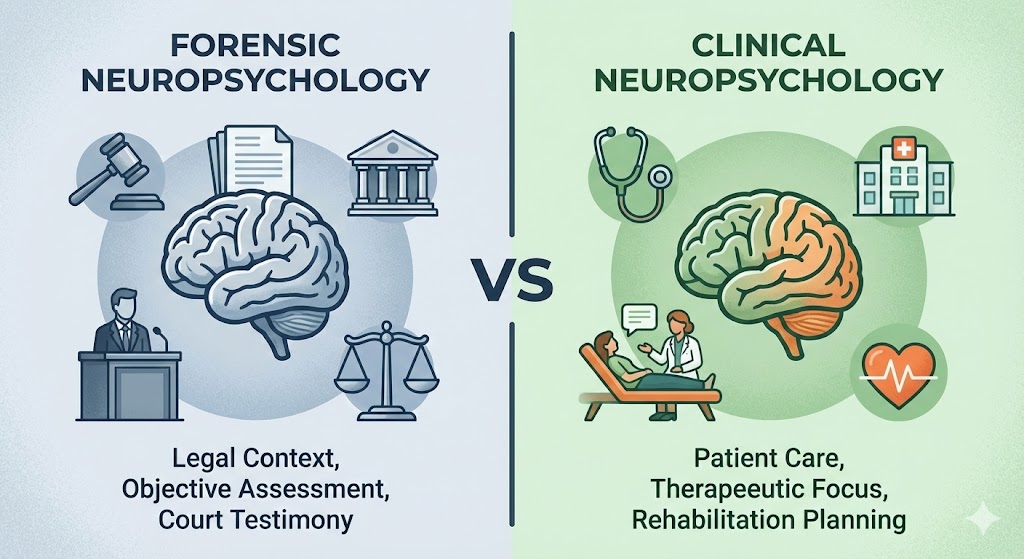
Clinical Neuropsychology: The Healer’s Path
Imagine someone who has had a stroke, traumatic brain injury, epilepsy, or long-term depression. They are struggling with memory, focus, or emotional control, and that’s where a clinical neuropsychologist comes into the big picture. Their job is to:
- Diagnose cognitive or emotional problems
- Plan treatment and rehabilitation
- Track recovery over time
- Work closely with doctors, therapists, and families
Normally, clinical neuropsychology is used in hospitals, rehabilitation centers, mental health clinics, or private practices, and the vibe is supportive, therapeutic, and recovery-focused.
Forensic Neuropsychology: The Legal Aspect
Now imagine someone involved in:
- A personal injury lawsuit
- A criminal case
- A disability claim
- A workplace accident dispute
This is where forensic neuropsychology steps in. Yes, these professionals assess brain function too, but their real client is often the court. Forensic neuropsychologists help to:
- Determine if cognitive problems are real, exaggerated, or unrelated
- Assess competency, responsibility, or mental capacity.
- Write formal legal reports
- Testify as expert witnesses.
Here, the focus is mainly on neutrality and objective facts backed by science.
The Core Differences Between the Two
| Aspect | Clinical Neuropsychology | Forensic Neuropsychology |
| Main goal | Patient care and recovery | Legal clarity and evidence |
| Primary setting | Hospitals and clinics | Courts and legal cases |
| Relationship | Therapeutic | Objectives and evaluative |
| Reports used for | Treatment planning | Lawsuits and trials |
| Emotional tone | Supportive | Neutral and factual |
Why is this difference important?
Mixing these roles can cause real problems. A therapist advocating for a patient in court is biased, but for a forensic expert offering emotional counseling, that’s inappropriate. Each field projects its integrity by staying in its lane, and that’s good news for both patients and the justice system.
So, Which One Do You Need?
If you or someone you know needs help managing brain-related symptoms, clinical neuropsychology is the way to go, but if a legal case depends on brain function, memory, or mental capacity, forensic neuropsychology is important. Indeed, it’s the same brain science, but two very different stages and aims.
Looking for a forensic neuropsychologist to help you with clinical cases or unbiased courtroom neuroradiology witnesses? Contact the team at Neuro Experts, PC today!